
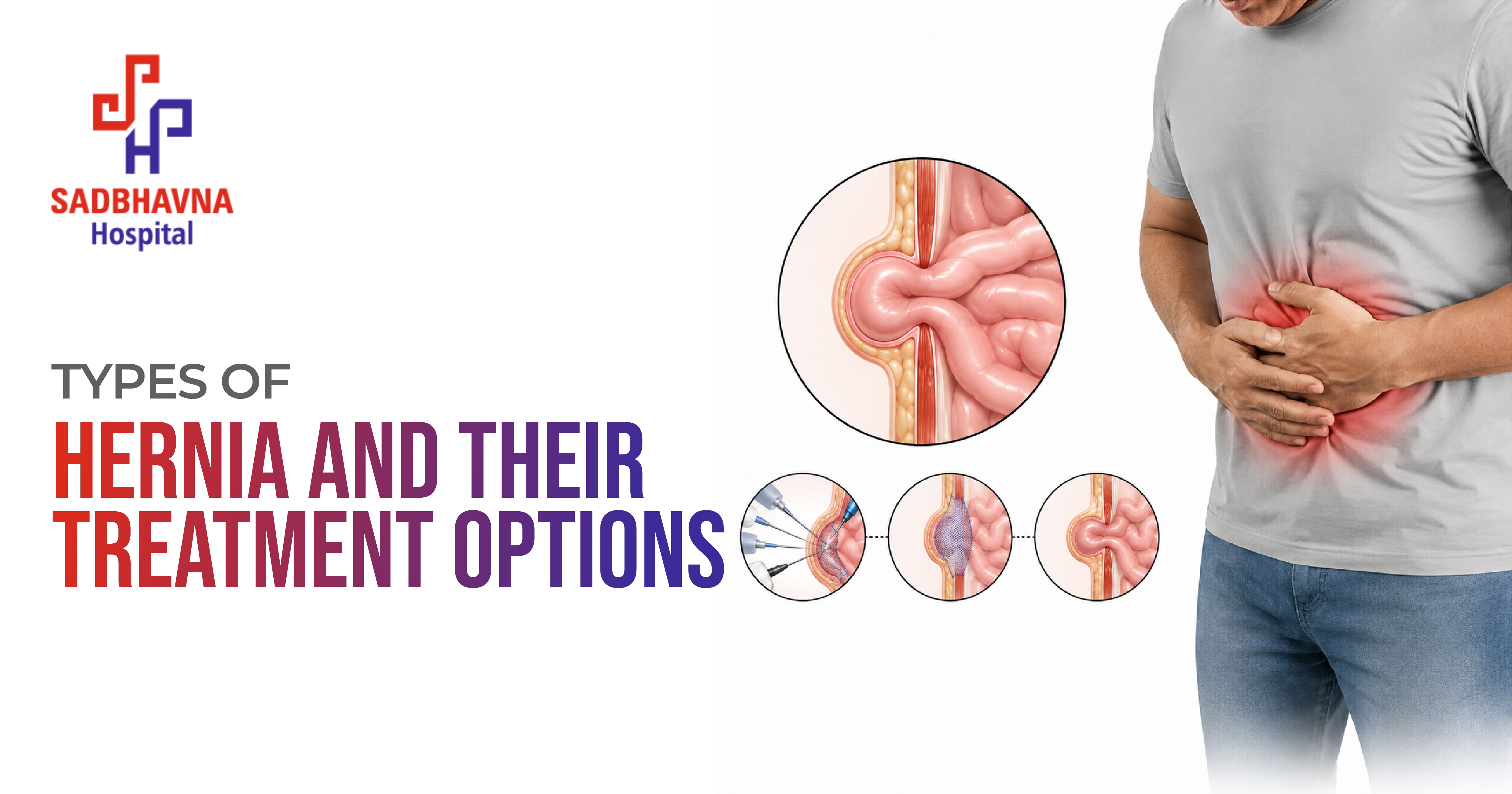
A hernia can look like nothing more than a small lump at first, easy enough to brush off as nothing, but ignoring it tends to backfire eventually, pain and more serious complications usually follow if it's left alone for too long. If you're looking into Hernia Treatment in Ahmedabad getting a real handle on the different types and what treatment actually involves helps you make the right call at the right time rather than guessing. Catching it early generally means a smoother recovery with far fewer complications trailing behind it.
What Is a Hernia?
A hernia occurs when an organ or fatty tissue pushes through a weak spot in the surrounding muscle, and it usually appears as a visible bulge that tends to become more pronounced when coughing, standing for a while, or lifting something heavy off the ground. Some hernias don't hurt at all in the beginning, which is honestly part of what makes them easy to ignore. Others bring real hernia treatment, or swelling that starts interfering with everyday activities faster than people expect.
Different Types of Hernia
Hernias aren't all the same, and where one shows up on the body says a lot about how it's treated.
- Inguinal Hernia: the most common type by a wide margin, especially among men. Part of the intestine pushes through the lower abdominal wall near the groin.
- A bulge right there in the groin area
- Pain when bending or lifting
- Pressure or discomfort that lingers after physical activity
- Femoral Hernia: Tells a slightly different story, showing up more often in women and sitting just below the groin rather than directly in it. These carry a genuinely higher risk of becoming trapped, which is exactly why doctors tend to push for earlier treatment here rather than a wait-and-see approach.
- Umbilical Hernia: Develops near the belly button itself. Fairly common in infants, though plenty of adults end up with one too, particularly after pregnancy or after putting on a significant amount of weight.
- Smaller ones might not cause any pain at all
- Larger ones usually need proper medical attention, not just watching
- Incisional Hernia: Forms somewhere entirely different, right near the site of a previous abdominal surgery, where weakness left behind in the surgical scar slowly lets tissue push through over months or years. Risk climbs for people carrying extra weight, or who've been through multiple abdominal surgeries.
- Hiatal Hernia: Happens inside the body rather than showing up as a visible lump, part of the stomach actually moves through the diaphragm and up into the chest cavity.
- Acid reflux
- Heartburn
- Trouble swallowing
- Chest discomfort
These last few symptoms get mistaken for ordinary acidity often enough that diagnosis ends up delayed longer than it really should be.
Hernia Treatment Options
What actually makes sense as treatment depends heavily on the type, size, and symptoms involved, there's no single answer that fits everyone.
- Watchful Waiting: For small hernias without real symptoms, just regular monitoring rather than jumping straight to treatment. That said, they shouldn't be written off entirely, since they can grow over time even without obvious warning signs.
- Lifestyle Changes: These help ease pressure on the abdominal muscles, though they won't actually repair a hernia that's already there.
- Maintaining a healthy weight
- Avoiding heavy lifting
- Eating a high-fibre diet
- Treating any chronic cough
- Cutting out smoking
- Hernia Surgery: For most hernias, this really is the only permanent fix. There are two common approaches worth knowing about:
- Open Hernia Repair: the surgeon makes a small incision and repairs the weakened muscle directly, often reinforcing it with surgical mesh for extra support
- Laparoscopic Hernia Repair: a more minimally invasive route using small incisions and a camera, which tends to mean less pain, smaller scars, and a quicker return to normal activity for a lot of patients
If you're looking into hernia treatment in Ahmedabad, going with an experienced surgeon at a properly equipped hospital genuinely improves both the outcome and how smoothly recovery goes.
When Should You Visit a Doctor Immediately?
Get emergency care right away if you're dealing with severe abdominal pain, a bulge that won't push back in no matter what you try, nausea or vomiting, fever alongside swelling, or skin around the hernia turning red or noticeably dark.
These signs can point toward a strangulated hernia, and that's not something to wait on, it needs surgery without delay.
Final Thoughts
A hernia genuinely won't fix itself on its own, that's worth sitting with for a second. The longer treatment gets put off, the more the risk climbs, pain that gets worse, intestinal blockage, and eventually a trip to emergency surgery nobody was planning for. Thinking about Hernia Treatment in Ahmedabad? Worth talking to a doctor at Sadbhavna Hospital as soon as a lump or ongoing discomfort shows up rather than waiting it out. You can call 9687644599 for consultation.
FAQs
-
Is every hernia painful?
Not always, actually. A fair number don't hurt at all when they first show up, pain tends to creep in later as they get bigger.
-
Can a hernia disappear without surgery?
Rarely, if ever. Lifestyle tweaks might take the edge off symptoms for a while, but surgery is really the only thing that fixes most hernias for good.
-
How soon can I return to work after surgery?
Desk jobs, often within one to two weeks. Anything more physically demanding usually needs a longer stretch of recovery before it's safe.
-
Can a hernia come back after surgery?
It's possible, though genuinely less common when the surgery's done properly and post-operative instructions are actually followed closely.
-
What happens if a hernia is left untreated?
It can grow larger over time and risks becoming trapped or strangulated, which turns into a real medical emergency fairly quickly.