
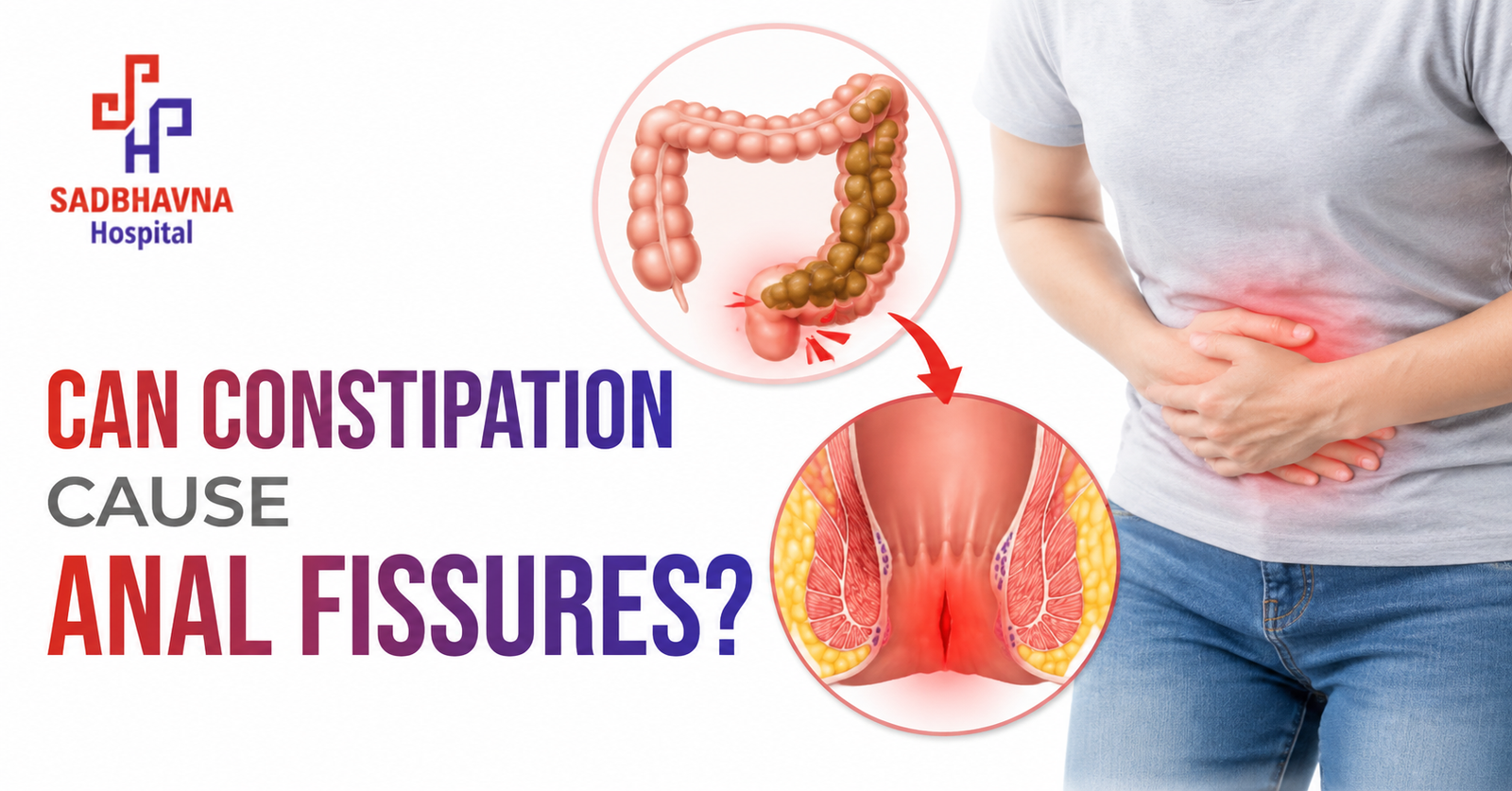
You notice a bit of blood on the toilet paper, and it stings when you go. Maybe it settles in a day or two, so you let it slide. But when it keeps coming back, a small tear in the skin around the anus, called an anal fissure, is a likely reason. Constipation is behind a lot of them. Hard stools do the damage, and the pain of the tear often makes people hold back, which only makes the next stool harder. Let’s look at how that happens, what you can do at home, and when it’s time to think about Fissure treatment in Ahmedabad.
How Does Constipation Lead to Anal Fissures?
Constipation means stools that are hard, dry, and tough to pass. When one of those stools stretches the anal opening past its limit, the skin can split. Straining makes it worse, because the pressure lands right on the injured spot.
Then a pattern sets in. The tear hurts, so you put off going. Stool sits longer, gets harder, and the next trip hurts even more. Each time, the tear can reopen before it has had a chance to heal.
Constipation isn’t the only reason, though. Repeated diarrhoea, childbirth, and some bowel conditions can also cause fissures.
What Are the Warning Signs of an Anal Fissure?
The signs are usually hard to miss. Most people notice a cutting or tearing pain while passing stool, and the burning that follows can last a few minutes or, in some cases, a few hours. You may also see bright red blood, often just a few spots on toilet paper or in the bowl. The area around the anus can feel raw or sensitive, and the muscle there may tighten up in a spasm, which adds to the pain and slows healing.
Here’s a catch. Haemorrhoids can cause bleeding and discomfort too, so the two get mixed up all the time. Don’t decide for yourself which one it is. A quick examination by a doctor settles it.
How Can You Relieve Constipation and Support Healing?
The goal is simple: softer stools and less strain on the tear. For a mild fissure, everyday habits often do a lot of the work.
- Increase Fibre in Your Daily Diet
Fruits, vegetables, oats, beans, lentils, and whole grains all help. Add them slowly over a week or two. A sudden jump in fibre tends to cause gas and bloating, which puts people off. - Drink Enough Water
Fibre needs fluid to do its job. How much you need depends on your health, activity level, and the weather, so listen to your body rather than chasing a fixed number. - Avoid Straining in the Toilet
Go when you feel the urge. Holding it in makes stool harder, and so does scrolling on your phone for twenty minutes while seated. If nothing happens within a few minutes, get up and try again later. - Try a Warm Sitz Bath
Sit in a shallow tub of comfortably warm water for 10 to 15 minutes. It relaxes the muscle around the anus and eases the burning. Many people find it most helpful right after a bowel movement. - Stay Physically Active
A daily walk keeps the bowels moving more regularly than you’d expect. If constipation still won’t budge, ask your doctor whether a stool softener or laxative makes sense for you.
When Should You Seek Medical Treatment?
A mild fissure often heals within a few weeks with good self-care. But if the pain keeps returning, the bleeding repeats, or the tear simply won’t close, it’s time to see a doctor.
Treatment usually starts with prescription ointments that relax the anal muscle so blood can reach the tear and healing can begin. For chronic fissures that don’t respond, doctors may consider injections or a minor surgical procedure.
Please avoid using medicated creams or laxatives again and again without advice. Book a visit if there’s no improvement after seven days of self-care or if symptoms are getting worse.
Where Can You Seek Fissure Treatment in Ahmedabad?
Anal pain affects more than your bathroom routine. It can disturb your sleep, your work, and your mood, and plenty of people suffer in silence because they feel too shy to bring it up. Doctors hear about this every day, so there’s nothing to be embarrassed about.
At Sadbhavna Hospital, patients can get guidance for ongoing anal discomfort, bleeding, and constipation-related problems. A proper assessment shows whether the cause is a fissure or something else, and what treatment fits.
If you’re looking for Fissure treatment in Ahmedabad, call Sadbhavna Hospital at 9687644599 to ask about a consultation. Getting advice early often means a shorter recovery and a lower chance of the problem coming back.
FAQs
-
1. Can constipation cause anal fissures?
Yes. Hard, dry stools and straining can tear the thin lining of the anus.
-
2. How do I know if constipation has caused a fissure?
Sharp pain while passing stool, burning afterward, and bright red blood are the usual clues. Only a doctor can confirm it, since haemorrhoids look similar from the outside.
-
3. Can an anal fissure heal without surgery?
Often, yes. Recent fissures commonly heal with softer stools, fibre, fluids, warm baths, and medical care when needed. Long-standing ones may need more treatment.
-
4. When should I consult a doctor for an anal fissure in Ahmedabad?
See a doctor if pain or bleeding keeps recurring, gets worse, or hasn’t improved after seven days of self-care. Heavy bleeding, or severe pain with fever, needs urgent care.
-
5. How can I prevent anal fissures from returning?
Keep up the fibre and fluids, stay active, don’t strain, and don’t ignore the urge to go. If constipation keeps coming back, ask a doctor to look for the cause.