
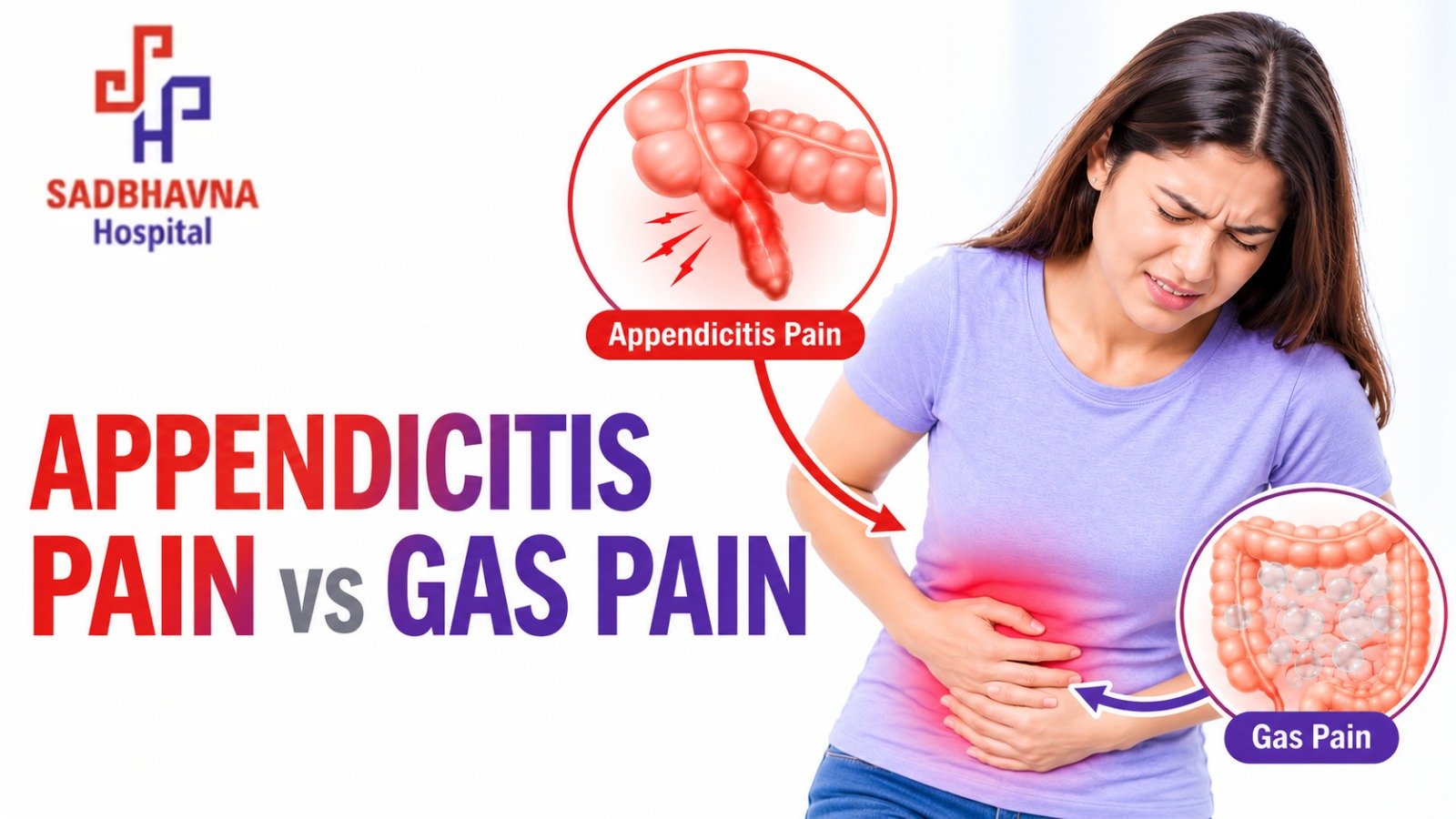
You get a sudden stomach ache after a meal. Most people think it’s trapped gas and carry on. But what if it’s something else? Appendicitis and gas pain are easy to mix up, since both can cause belly discomfort, bloating and cramps. The difference matters, though, because appendicitis left untreated can lead to serious complications. If you know the warning signs and get medical help early, you avoid delays and get the right treatment, including appendix surgery in Ahmedabad when a doctor says you need it.
Here’s how the two differ, and when a stomach ache shouldn’t be ignored.
What Does Appendicitis Pain Feel Like?
Appendicitis develops when the appendix, a tiny pouch connected to the large intestine, becomes inflamed and enlarged. It typically requires immediate medical intervention.
The pain often starts around the belly button. Then it moves down to the lower right side of the abdomen and gets worse over a few hours.
Common symptoms include:
- Pain in the lower right abdomen that doesn’t ease
- Pain that gets worse when you walk, cough or move
- Nausea or vomiting
- Not wanting to eat
- A mild fever
- A swollen, tender belly
An ordinary stomach ache usually settles by itself. Appendicitis pain generally doesn’t, and it can keep getting worse.
What Does Gas Pain Feel Like?
Gas pain comes from gas trapped somewhere in the digestive tract. It can feel like mild cramps, or it can be sharp.
You might notice:
- Bloating, or a feeling of being full
- Burping, or passing gas often
- Cramps that come and go
- Pain that moves around
- Relief after you pass gas or open your bowels
Eating too fast, certain foods, constipation and digestive problems are common causes.
Feeling better after passing gas doesn’t completely rule out another medical problem, though.
Appendicitis Pain vs Gas Pain: How Can You Tell the Difference?
Both can make your belly hurt, but they tend to behave differently. Here’s how they usually compare.
| Signs | Appendicitis Pain | Gas Pain |
|---|---|---|
| Pain location | Often moves to the lower right abdomen | Can occur anywhere in the abdomen |
| Pain pattern | Usually persistent and worsening | Often comes and goes |
| Movement | May worsen while walking or coughing | May change with position |
| Bloating | Can occur | Common |
| Nausea | Frequently present | Sometimes present |
| Fever | May develop | Not usually caused by gas |
| Relief after passing gas | Usually does not provide relief | May provide relief |
Remember: Use this as a rough guide, not a diagnosis. Appendicitis doesn’t always follow the pattern, and some people have unusual symptoms.
When Should You Worry About Abdominal Pain?
Not every stomach ache is gas. Take it seriously if you notice any of these:
- Pain that starts around the belly button and then settles in the lower right
- Belly pain that keeps getting stronger over a few hours
- A fever with nausea or vomiting
- Severe discomfort or agony whenever you move
- No appetite, with pain that won’t go away
How Do Doctors Diagnose Appendicitis?
There’s no single test for it. A doctor puts the picture together from your symptoms, your medical history and an examination, often with a few tests on top.
- Physical examination: the doctor presses on your belly to find where it’s tender or painful.
- Blood tests: these show whether there’s an infection or inflammation.
- Urine tests: these help rule out a urinary tract infection and other causes.
- Ultrasound or CT scan: a scan lets the doctor see the appendix and check for inflammation.
The earlier it’s confirmed, the sooner the right treatment can start, and the lower the chance of complications.
What Are the Treatment Options for Appendicitis?
Treatment depends on how inflamed the appendix is and on your general health.
- Appendectomy: Most appendix inflammation is treated surgically. It can be done laparoscopically or openly.
- Antibiotics: some patients with uncomplicated appendicitis can be treated with antibiotics under medical supervision. Appendicitis can come back, though, and surgery may still be needed.
- Emergency treatment: a ruptured appendix, or an infection linked to it, may need urgent surgery, antibiotics and more hospital care.
If you’re advised to have surgery, ask your surgeon about the procedure, the recovery time and the possible risks.
Get Timely Surgical Care at Sadbhavna Hospital
Never ignore belly pain that lasts or gets severe. Knowing the warning signs of appendicitis, and getting medical help early, can prevent serious complications.
At Sadbhavna Hospital , patients can get medical evaluation and guidance for abdominal conditions and surgical concerns. If your symptoms suggest appendicitis, visit a doctor immediately.
For information about appendix surgery in Ahmedabad , call Sadbhavna Hospital on 9687644599 and talk to the hospital team about what’s worrying you.
Frequently Asked Questions
-
1. How do I know if my stomach pain is gas or appendicitis?
Gas pain often comes and goes, and it may ease after you pass gas. Appendicitis pain usually becomes constant, worsens over time and may move to the lower right abdomen.
-
2. Can appendicitis pain start on the left side?
It usually causes pain on the right. But the position can vary with where your appendix lies and your own anatomy. Get any unusual belly pain checked by a doctor.
-
3. How quickly does appendicitis pain get worse?
It often builds over several hours. The pain may shift from around the belly button to the lower right abdomen, though symptoms differ from person to person.
-
4. When should I visit a hospital for appendicitis in Ahmedabad?
Go to a hospital straight away if you have belly pain that won’t go away or keeps getting worse, especially in the lower right, along with nausea, vomiting or a fever. Severe pain needs emergency evaluation.
-
5. Is appendix surgery necessary for every appendicitis patient?
Not always. Surgery is the standard treatment for most cases, but some patients with uncomplicated appendicitis may be considered for antibiotics after a medical assessment.