
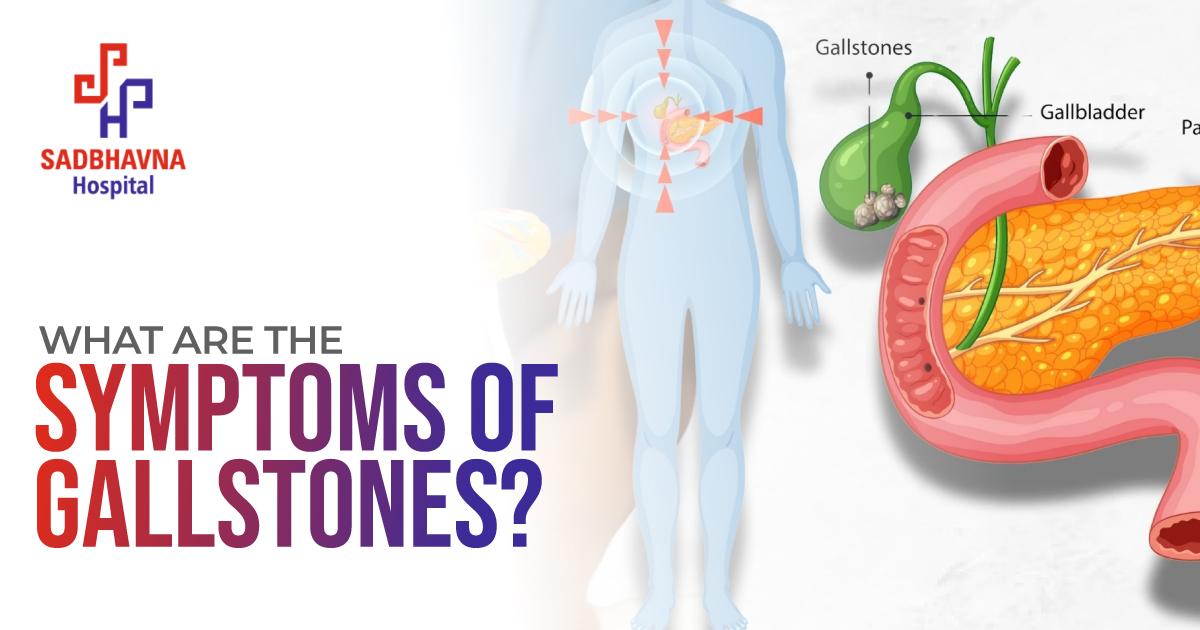
Gallstones are a common digestive problem, but many people don’t even know they have them until the pain becomes too excruciating to ignore. These tiny stone-like formations grow up inside the gallbladder, a small sack that stores bile. But as those stones impede the flow of bile, symptoms begin to appear, sometimes mild signs that you have gallstones, sometimes severe. These signs help you get timely help. If you are searching for Gallstone Treatment in Ahmedabad, visit Sadbhavna Hospital.
Before symptoms create havoc, it’s good to understand how gallstones behave and what your body signals when it’s overloaded.
1. Sudden Pain in the Right Upper Abdomen
Gallstones, a sharp, cramping pain in the upper right portion of your abdomen, is the most common symptom. This pain tends to strike us out of nowhere and can last for a few minutes up to several hours. It often occurs after a heavy or fatty meal, since the gallbladder contracts more in digestion.
Many describe the pain as:
- And a gnawing feeling under the ribs
- A tight, squeezing sensation
- Anxiety that gets me up and out of bed.
The pain can also spread to the back or right shoulder, where it may be mistaken for muscle pain. But when this general discomfort happens repeatedly, it’s a good idea to be checked.
2. Nausea and Vomiting
Gallstones can disrupt the flow of bile from your liver, triggering digestive distress. In consequence, nausea and vomiting may follow the meals. Nausea is very common, and some people only feel a little sick; others will be physically ill with the agony of the pain.
This happens because:
- Bile doesn’t flow properly
- The fiery anger of the stomach is what prevents it from digesting fatty food.
- The gallbladder becomes inflamed.
Avoiding eating because you are experiencing nausea or having a sick feeling after consuming oily or spicy foods could be a sign of a gallbladder problem.
3. Bloating and Indigestion
A lot of people consider bloating a little problem that’s easy to dismiss, but if you experience bloating multiple times per week, it might be a key piece of the puzzle. Gallstone affects fat digestion, which can lead to the tiresome day of belching, a heavy stomach and more gas.
Common digestive complaints include:
- Feeling full quickly
- Heartburn or a burning feeling in the chest
- Constant discomfort after meals
While the symptoms may seem benign, don’t wave them off if they happen too often.
4. Back Pain or Shoulder Pain
But not all gallbladder pain is restricted to the abdomen. These symptoms are sometimes associated with pain and can cause it to move toward the right shoulder blade or in the middle of your back. That’s because the nerves of your stomach and bowels are connected to the back and shoulders.
If your back pain repeatedly flares up with abdominal distress and nausea, it might not even be a spine problem; it could be the gallbladder.
5. Fever and Chills
Abdominal pain accompanied by a fever may mean an infection in the gallbladder, or cholecystitis. This happens when a gallstone obstructs the bile duct and leads to inflammation.
- Warning signs include:
- High temperature
- Shivering
- Pain that increases when you take deep breaths
It is not something that should be ignored, because an untreated infection can become more serious. Such cases should require immediate medical assistance.
6. Yellowing of Skin and Eyes (Jaundice)
When a gallstone is dislocated from the gallbladder to become lodged in the bile duct, sufficient bile can no longer reach the intestine. Instead, it begins to build up in the blood and causes jaundice. It causes:
- Yellow skin
- Yellowish eyes
- Dark-coloured urine
- Pale or clay-coloured stools
7. Changes in Stool and Urine Colour
The colour of urine and stools frequently manifests changes in digestion. When gallstones disrupt bile flow:
- Urine becomes dark brown
- Stools may be pale, greasy or loose.
It is greasy because the body doesn’t digest fats very well. If this occurs, you can also become fatigued and weak because necessary nutrients are being poorly absorbed.
8. Persistent Heartburn
Surprisingly, heartburn can be an earlier symptom of gallstones in some sufferers. If bile doesn’t flow smoothly, it can cause a tight burning feeling or mild discomfort in the chest or upper stomach. It is often confused with indigestion or acidity.
But unlike your typical acid backwash, the kind of acid reflux that leaves you holding your hands over your throat cannot be:
- Pain after meals
- Bloating
- pressure under the rib cage
If antacids aren't helping, the gallbladder might be to blame.
When Should You See a Doctor?
Many people with gallstones have no symptoms. Others develop silent gallstones that go unnoticed for decades. But once symptoms start, they tend to develop over time. Signs requiring a medical check: If you have:
- Repeated abdominal pain
- Frequent nausea
- Pain after eating
- Yellowing of the skin
- Sudden fever with abdominal discomfort
In some cases, ultrasounds can be performed by doctors to ensure the presence of stones. Treatment of stones would depend upon their severity, type and size. In the majority of cases, laparoscopic cholecystectomy (removal of the gallbladder through a small incision) is a safe and successful solution. It enables you to have a smooth life afterwards without long-term complications.
Jaundice is one of the scarier symptoms associated with gallstones, and it indicates a blockage that requires immediate treatment. Left untreated, it could potentially develop into liver or pancreatic issues.
Final Thoughts
Gallstones can begin with mild digestive complaints, but then the symptoms become increasingly ominous. If you pay close attention to your body, you can catch it early and possibly prevent complications! If you suspect any of the symptoms, visit Sadbhavna Hospital. With the latest treatment for gallstones, now relief is easier and safer too.
Identifying the symptoms early translates to better health, faster diagnosis and peace of mind.